Bringing a new baby home is one of the most exciting moments of your life — I should know, since I've been through it three times myself. Between the late-night feedings, the tiny fingers wrapped around yours, and the flood of love that seems to grow every single day, it's easy to feel like nothing could go wrong. But part of loving and protecting your baby is being prepared for the moments no parent wants to think about, including what to do if your infant stops breathing or begins to choke.
It's a hard thing to picture. But it's also more common than most new parents realize, and it's exactly why infant CPR and choking response are two of the most important skills you can learn before or shortly after your baby arrives.
Why infants are especially at risk
Babies explore the world with their hands and mouths, which means small objects, loose items, and even certain foods can quickly become choking hazards. According to the American Heart Association, unintentional choking and suffocation are a leading cause of injury-related death for infants under one year old. The same research shows that a majority of cardiac emergencies (in infants and adults) happen at home, not in a hospital or a public place.
That statistic is worth sitting with for a moment: home is where these emergencies are most likely to happen. Which means the person most likely to be there when it counts isn't a paramedic or a doctor…it's you.
The first few minutes matter most
When an infant stops breathing, or their airway becomes blocked, every second counts. Emergency responders do incredible work, but even a fast response can take several minutes to arrive — minutes during which a prepared caregiver can make the difference between a frightening moment and a tragedy. Knowing how to recognize the signs of choking, how to respond calmly, and how to perform infant CPR if breathing stops isn't about assuming the worst. It's about being ready, so fear doesn't get in the way of action if the moment ever comes.
What new parents should understand about infant CPR
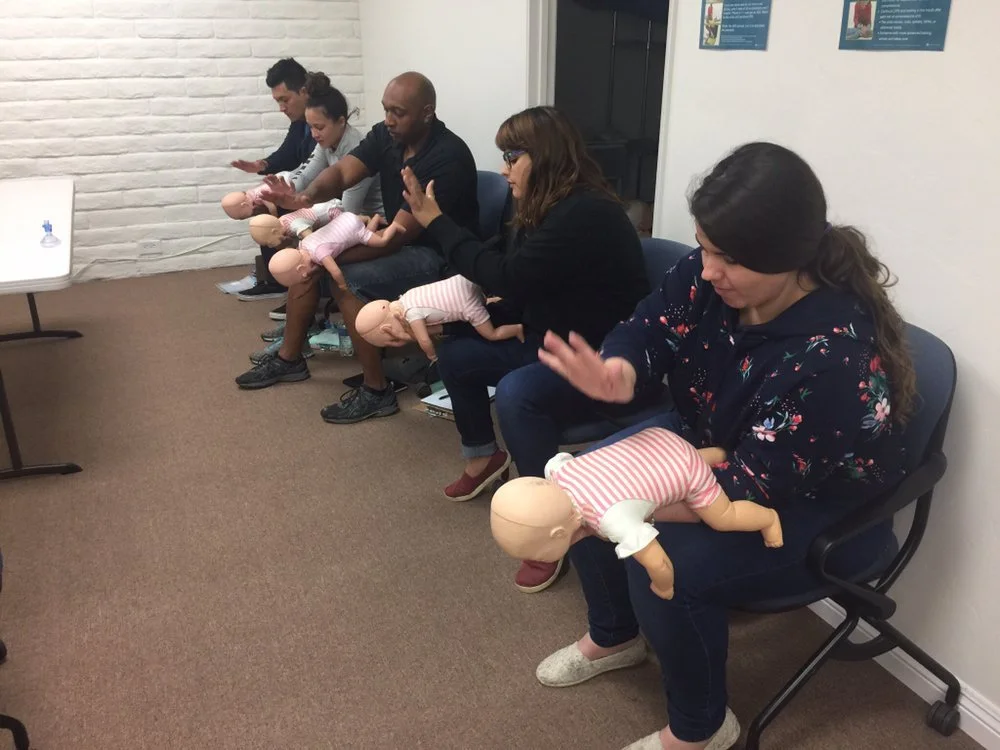
Infant CPR isn't the same as CPR for children or adults. Babies' bodies are smaller and more delicate, which means the techniques for chest compressions, rescue breaths, and clearing an obstructed airway are different — and they matter. Watching a video online is a good start, but it's not a substitute for hands-on practice. Muscle memory, confidence, and the ability to stay calm under pressure are things you build by actually practicing the skill, with feedback from a real instructor, on a training manikin designed to feel like the real thing.
This is exactly why CPR Heroes' classes are hands-on. Every new parent leaves not just knowing what to do, but genuinely feeling ready to do it.
You don't have to figure this out alone
Becoming a parent comes with a long list of things to prepare for: car seats, pediatrician visits, baby-proofing the house. Add infant CPR and choking response to that list, and give yourself the peace of mind that comes with knowing you're ready for anything.
CPR Heroes offers hands-on, American Heart Association-certified CPR training designed for real life, including infant, child, and adult CPR — right here in Chula Vista, serving families throughout San Diego, National City, Bonita, Eastlake, Imperial Beach, and Coronado. Classes are small, supportive, and built to help you leave with real confidence, not just a certificate.
Ready to prepare for your growing family? Register for an upcoming class or call us at 619-535-7858 to find a session that works for your schedule.